
What a Thorough Preventive Maintenance Visit Actually Covers

A complete preventive maintenance (PM) visit covers every system on the machine, like the cooling loop, filtration, lubrication points, drive components, calibration of each axis, pneumatics and hydraulics, fasteners, and every safety device. It ends with a written record on the machine itself and a walk-through with the operators who run it.
Many shops picture PM as something close to an oil change. Top off the fluids, swap a filter, and sign the sheet. A real visit to a laser, a press brake, or a punch goes much further, because each of those machines holds tolerances that drift the moment a guide goes dry, a filter clogs, or an axis falls out of alignment.
Here is what our technicians actually do when they service a machine, in the order they do it.
Streamline Maintenance with Easy Kits
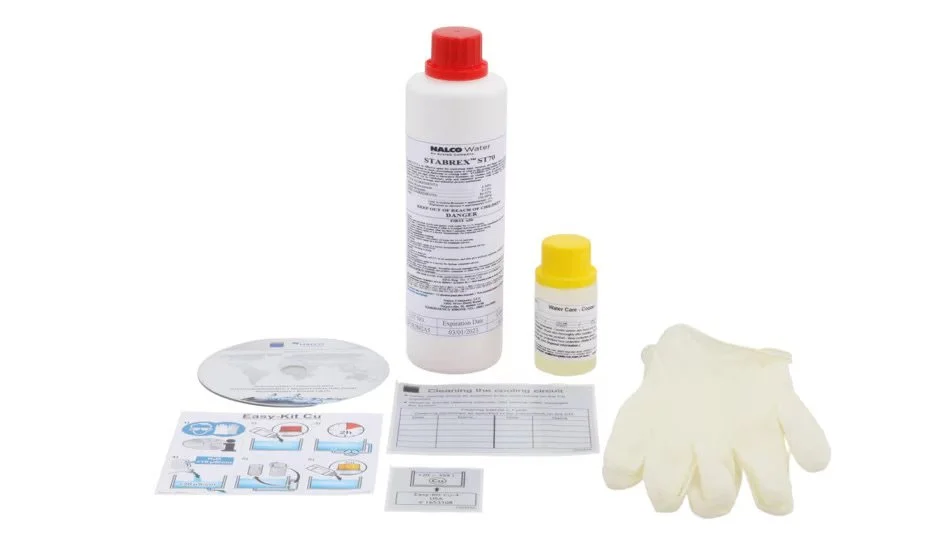
To get the most out of your service visit, order your TRUMPF Easy Kits and Filters in advance so they're ready for your technician's arrival. Annual cooling unit maintenance is critical for removing contaminants that shorten machine life. TRUMPF Easy Kits work across their entire lineup of lasers and machines, packing everything your technician needs, from biocides to corrosion inhibitors, into a single maintenance bundle.
It Starts With Lockout/Tagout
Before a technician touches a grease fitting or opens a cabinet, the machine gets isolated from power and locked out. Lasers carry high voltage and stored energy in the cooling and capacitor systems. Press brakes hold hydraulic pressure even when the ram is at rest. Lockout/tagout removes that risk for everyone on the floor, and it’s the first line on every procedure we run.
On many TRUMPF machines, the service points are color-coded so the technician knows at a glance which fitting needs grease or spray lubricant, which is a fill point, and which is inspection-only. That system exists because a thorough PM has dozens of points to hit, and missing one quietly shortens a component's life.
Cooling and Water Quality
On a fiber laser, the cooling loop protects the most expensive parts of the machine, so it gets close attention.
We use deionized water for reasons that go beyond preventing scale. Tap water conducts electricity. Deionized water has very low conductivity, which keeps it safe in contact with the electrical and optical components inside the laser, and it leaves no mineral deposits on the heat exchanger surfaces. Our technician measures the water conductivity with a meter. A high reading indicates that impurities have entered the loop, signaling that the ion exchange resin needs to be replaced before it stops protecting the system.
Water also has a service life. Over time, deionized water absorbs carbon dioxide from the air. It turns acidic, which is why it gets replaced at the manufacturer's recommended interval rather than left in the machine indefinitely. We check temperatures at the same time, since the cutting head and the laser source run at different setpoints, and a drift in either one shows up in cut quality.
Filtration, In More Places Than Most People Expect
Filtration on a laser is not a single filter. It runs through the whole machine.
We change the cooling water filters at the manufacturer-specified interval, replace the gas filters that keep the laser clean, and confirm that the fine filter on the nitrogen supply line is doing its job, since contamination in the assist gas affects the kerf and the edge quality of every part. We clean the condenser fins on the chiller, and we vacuum them rather than blow them out, because compressed air drives dust into the air around the fiber laser source and into the cabinet, exactly where it does the most harm. Filter mats come out, get cleaned or replaced, and steel mats get blown clear away from the machine.
Press brakes have their own filtration. The hydraulic filters and the air breathers on the tank keep dirt out of the oil, and contaminated oil is behind most hydraulic problems, from jammed valves to a gradual loss of pressure.
Lubrication, Belts, and Drive Components
A fabrication machine moves fast and carries real acceleration forces through its rails, ball screws, and guides. Without the right lubrication, friction wears those parts and precision goes with them.
Our technician greases the linear guides, ball screws, and back gauge components with the lubricant specified by the manufacturer. Over-greasing is its own failure mode. Excess grease attracts dust and builds up, contaminating components it was meant to protect. The goal is the right amount in the right place, not as much as the fitting will take.
Drive components get inspected at the same time. On the laser blower and belt-driven axes, we check the drive belt for wear and confirm its tension, since a loose or worn belt first shows up as vibration and inconsistent motion before it fails outright.
Axis Calibration and Alignment
This is the work that separates a real PM from a quick service, and where a fabricator gets the most value.
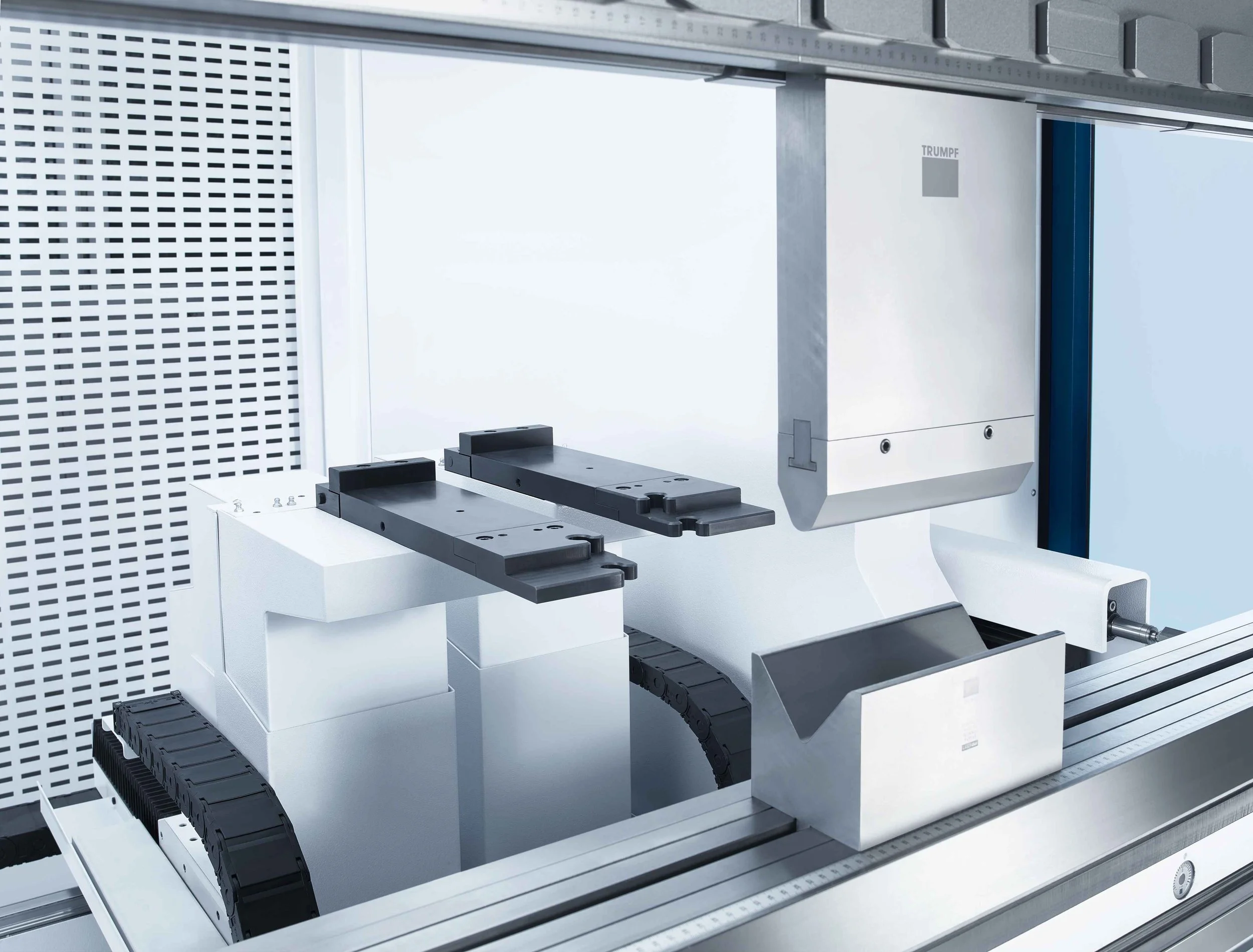
On a press brake, we verify that the back gauge fingers actually sit where the control says they sit. The reported position and the true position must match over the full travel range, or every part comes out slightly wrong. We check ram parallelism to ensure the bend angle remains consistent along the entire length of the workpiece, and we set the ram gib clearance to spec. Too much clearance makes the ram cycle inaccurate. Too little generates heat.
On a laser, alignment shows up in the cutting head, nozzle changer, and calibration plate, all of which we clean and verify to keep the beam true to the work.
Pneumatics, Hydraulics, and Fasteners
A machine running thousands of cycles loosens its own hardware over time. Vibration backs bolts out, alters alignments, and slowly pulls a machine out of tolerance.
We check the pneumatic lubricator and hydraulic levels, inspect the seals and air breathers that keep contamination out of the system, and confirm oil quality rather than just quantity. We work through the hoses and cables on the moving axes, looking for nicks, cuts, and pinch points that could otherwise cause a mid-job failure. Then we torque the mounting hardware back to specification, because a fastener that has walked loose is often the hidden cause of an accuracy problem nobody can explain.
Safety Device Verification
Every PM ends with a full safety check. We test the emergency stops, reset and pause functions, light curtains and laser guards, two-hand controls, foot pedal on a press brake, and indicator lamps. These checks take only a few minutes and confirm that the machine is safe for the operators who will run it over the next several months.
The Walk-Through Before We Close Out

We do not close a job from the parking lot. Before our technician leaves, they walk the machine with your team and review what they found, what they serviced, and anything that should be added to the watch list before the next visit. If a tooling set is showing wear, a filter is running dirty faster than it should, or an axis is trending toward a calibration limit, your operators hear it directly from the person who just had the cabinet open.
The PM Sticker
When the work is done, the machine gets a physical record of it. The PM sticker on the machine shows when the service was performed and by whom. The sticker sits on the machine, where any operator, supervisor, or auditor can see at a glance that the equipment is current and accounted for. It’s a small detail to communicate accountability in a way a PDF alone never quite does.
How Often Does A Machine Need A PM?
TRUMPF recommends having machines serviced by factory-trained technicians at least twice a year for inspections, calibrations, and cleaning that keep them within tolerance. That cadence aligns with the industry norm for fabrication equipment, where precision alignment checks on a laser or a press brake are typically scheduled every 6 months. Between professional visits, operator-level daily and weekly care handles cleaning and basic lubrication that protect the technician's work.
The Full Checklist
Every Visit
Lock out and tag out the machine before any service begins
Identify and service every lubrication point with the manufacturer-specified lubricant, without over-greasing
Inspect drive belts for wear and confirm proper tension
Check and torque mounting hardware to specification
Inspect hoses and cables on moving axes for nicks, cuts, and pinch points
Verify all safety devices: e-stops, reset and pause, light curtains and guards, two-hand controls, indicator lamps
Review findings with your team in a walk-through before close-out
Apply a dated PM sticker to the machine
2D Laser Cutting Machines
Measure cooling water conductivity and replace the ion exchange resin when it reads high
Replace deionized water at the manufacturer's recommended interval
Confirm cutting head and laser source temperatures are at the setpoint
Change cooling water filters and gas filters at specified intervals
Confirm the fine filter on the nitrogen supply line is in good condition
Vacuum condenser fins rather than blowing them out
Clean or replace filter mats
Clean and verify the cutting head, nozzle changer, and calibration plate
Press Brakes
Verify back gauge finger position against the control readout across full travel
Check the ram parallelism for a consistent bend angle along the workpiece
Set ram gib clearance to specification
Lubricate back gauge ball screws, linear guides, and bearings
Check hydraulic fluid level, quality, and viscosity
Inspect tank seals, air breathers, and hydraulic filters
Inspect punch and die tooling for dents, cracks, and wear
Schedule a Preventive Maintenance Visit
A thorough PM is the work that keeps your equipment accurate, your parts in spec, and your production on schedule. We service TRUMPF lasers, press brakes, punches, and automation across our territory, and every visit follows the level of detail above. View our technical services or contact our team to put your machines on a preventive maintenance schedule.
