

Smart Factory Design and Implementation Services

Maintecx guides manufacturers through every phase of a TRUMPF smart factory build. As the exclusive TRUMPF representative across the Midwest and South, we bring deep knowledge of the machines, layouts, and production environments where connected manufacturing must actually work. We walk your floor, design the system around your operation, and stay involved through installation, training, and long-term growth.
What Is a Smart Factory?
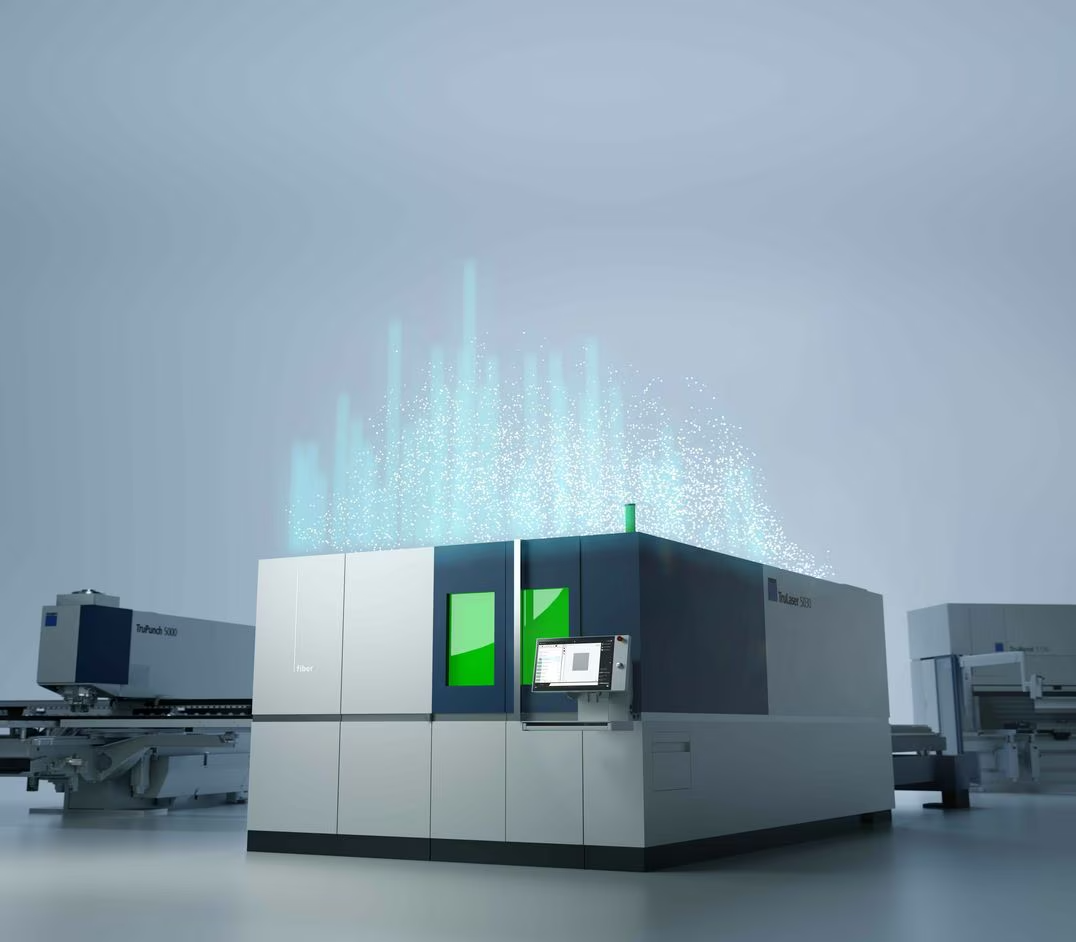
A smart factory connects machines, automation, software, and people so information flows automatically and production runs with less manual coordination. For sheet metal fabricators, that means integrating laser cutting, punching, bending, and storage into a system in which material moves from raw sheet to finished part with minimal handling between steps. The goal is to have more capacity from the same floor space, consistent quality across shifts, and the ability to take on more work without proportionally adding headcount.
The Smart Factory Design Process
The path to a connected factory follows a predictable sequence, even if the timeline varies by facility size and complexity.
Step 1: Production Assessment
We start by walking your floor. We look at your current machines, material flow patterns, job mix, storage situation, and the bottlenecks slowing throughput. Where does material wait? Which processes depend on a single skilled operator? What already runs lights-out, and what requires manual intervention?

Step 2: Layout and System Design
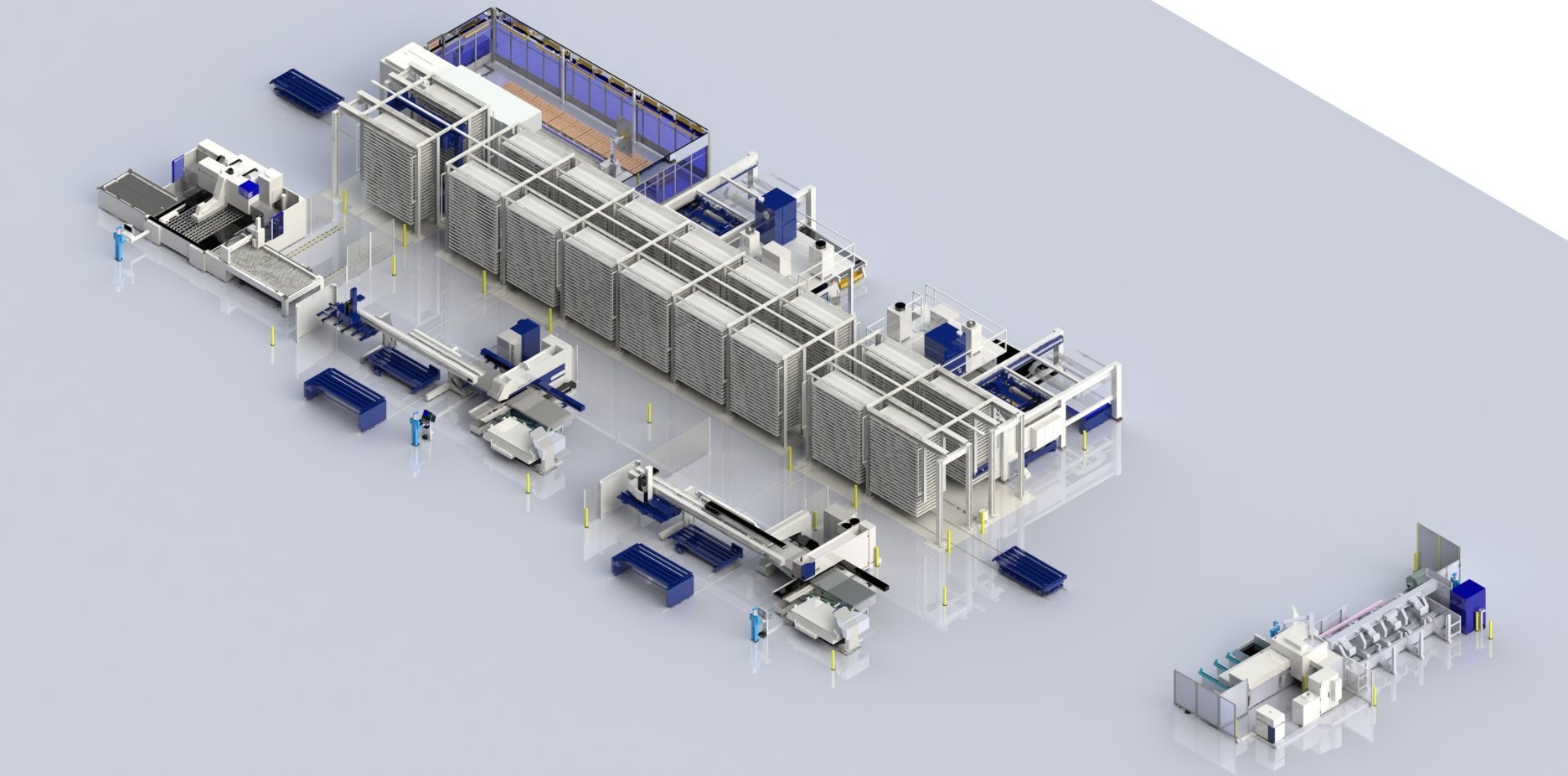
With a clear picture of your current state, we work with you and the TRUMPF Smart Factory engineering team to design the connected system. This includes machine selection, storage system sizing, automation components (loading, unloading, part sorting), and software integration.
Step 3: Phased Implementation
Most smart factory builds happen in stages. A common approach is to start with the machines and storage backbone, establish the material flow, and then layer in additional automation (robotic unloading, part sorting, panel-bending cells) as the team builds confidence in the system. The staged approach keeps operations running during the build and gives operators time to learn each phase before moving on to the next.
Step 4: Installation, Training, and
Go-Live
We coordinate equipment installation around your production schedule to minimize downtime. TRUMPF and Maintecx application engineers work on-site during go-live, covering commissioning and hands-on training so your team knows how to program the system, troubleshoot it, and get the most out of it from day one.

Step 5: Optimization and Scaling
The first several months after go-live focus on dialing in the system: nesting strategies, job-scheduling logic, and automation parameters. Most customers then identify the next opportunity, whether that means connecting another machine to the storage system, adding a robotic cell to bending, or integrating the factory floor with their ERP. The architecture is designed to grow with you.
Timeline and Milestones
Here is a general framework for a mid-size smart factory build involving a STOPA automated storage system, two or more connected machines, and automation for loading and unloading:
Assessment and design: 4 to 8 weeks
Equipment lead times: 3 to 9 months, depending on machine mix and TRUMPF production schedules
Site prep and installation: 4 to 12 weeks, depending on facility modifications required
Training and go-live: 2 to 4 weeks
Optimization phase: Ongoing, with most facilities hitting their stride 3 to 6 months after go-live
From the initial conversation to an operational smart factory, a significant build typically takes 12 to 18 months. Simpler starts, like a connected laser and compact storage system, move considerably faster. Equipment lead times are the variable most outside our control. We recommend starting conversations before you are in urgent need of capacity. Shops that plan 18 to 24 months ahead have the most flexibility in equipment selection and scheduling.
Case Study:
Dane Manufacturing
Dane Manufacturing began its TRUMPF partnership more than two decades ago. When Troy Berg acquired the company, he built a machine set capable of handling the precision and variety his customers required, starting with punching machines and expanding into laser cutting over the years.
The major transformation came with the move to a 510,000-square-foot facility in Waunakee in 2024. Berg and the TRUMPF team designed the factory layout around automation from the start.
Since moving to Waunakee, Dane Manufacturing has recorded 191% revenue growth, scaling to approximately $50 million in revenue with around 200 employees. The Fabricator named Dane Manufacturing its 2026 Industry Award winner, citing operational improvement, business growth, and contribution to the manufacturing community.
Key equipment in the Dane smart factory:
TRUMPF TruLaser 3030 (10 kW fiber)
TRUMPF TruPunch 5000 with SheetMaster
TRUMPF TruBend Center 7030 with Starmatik robotic system
TRUMPF TruLaser Tube 5000
TRUMPF TruBend 4000 (Bend Center)
STOPA automated storage system (420 shelves)
See It In Action
Learn More About Intelligent Factories
-
From Isolated Machines to One Connected System: What Makes a Factory Smart
-
Your ERP Is Not the Problem
-

AI in Manufacturing
Start the Smart Factory Conversation
Every smart factory starts with a conversation about where you are and where you want to go. We review your floor, job mix, growth targets, and timeline to determine what makes sense for your operation. If you're planning a new facility, expanding an existing one, or just tired of watching material sit between operations, we're here to help.