Speed Meets Sophistication: Inside the TruBend Center 7030
Every fabricator knows the tradeoff: run fast and risk surface quality, or slow down and maintain precision. The TruBend Center Series 7000, including the TruBend Center 7030, was engineered to eliminate that choice. As TRUMPF's highest-throughput panel bender, it handles large-format sheets up to 3,123 mm in length and a maximum part size of 3,120 mm x 1,500 mm, all while delivering scratch-free, complex-geometry results.
In this blog, we'll break down exactly how the 7030 achieves those results and why it's the right machine for shops that can no longer afford to choose between speed and quality.
Beyond the Press Brake: Why the 7030 Bends Differently
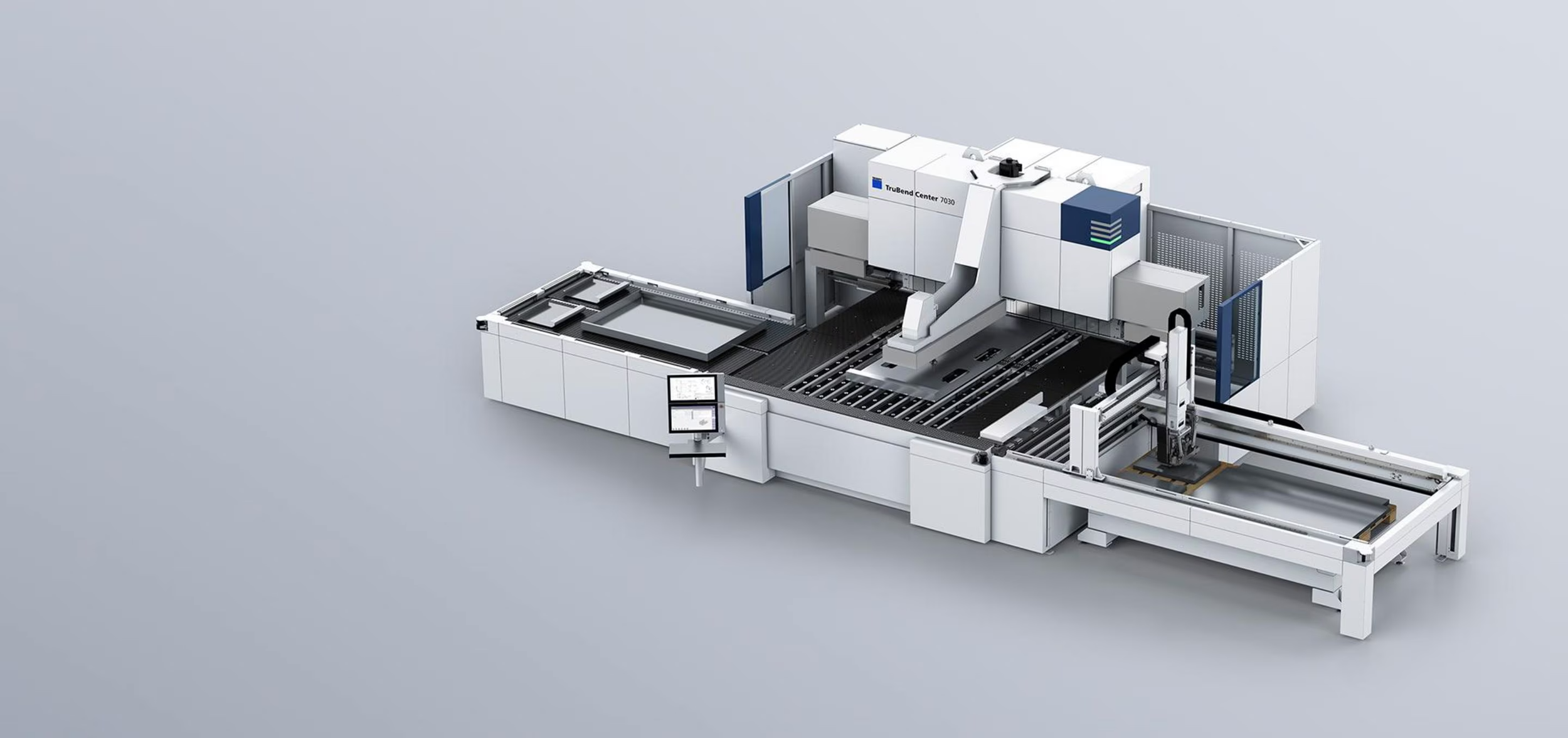
The panel-bending process itself gives the 7030 an inherent edge over a traditional press brake. But the 7030's engineering takes those advantages further.
1. The Split-Drive Architecture That Changes Everything
Rather than relying on a single central hydraulic cylinder, the 7030 features cylinders on the left and right. This split-drive concept increases axis velocity across the board, allowing the machine to move between bends faster without sacrificing positional accuracy. The result is a machine that bends parts up to 30% faster than its predecessor.

2. Scratch-Free Bending for Surface-Critical Parts
The 7030 uses a swing-folding process in which the bending tool rotates around the bend point rather than sliding across the material. Because there is no die friction, pre-painted panels, stainless steel, and aluminum sheets remain completely unmarked from start to finish. For architectural cladding, food-service equipment, or decorative enclosures, where a single scratch can mean a rejected part, this is the difference between a profitable job and a costly one.
3. The 2-Axis Manipulator: Handling the Part So Your Operator Doesn't Have To
The 2-axis part manipulator automatically positions all bends along each component edge and includes an additional height axis that enables parts with negative bends to lift cleanly. This means the machine manages narrow profiles, multi-stage flanges, and complex bend sequences with no operator intervention. Junior staff can consistently produce master-level results because the intelligence of the part's orientation lives in the machine, not in the hands of whoever is standing at the controls.
4. ACB Laser: First-Part-Good Every Time
The 7030 features TRUMPF's patented ACB Laser angle measurement system. Optical sensors measure each bend's angle without contact and correct for material springback or thickness variation in real time. This eliminates the trial-and-error correction cycles that routinely slow a press brake workflow and ensures that every flange across a long production run hits the same specification.
The Strategic Benefits of the TruBend Center 7030
The skilled labor shortage and the pressure to run high-mix production profitably are two of the most persistent problems on the modern shop floor. The 7030 was designed with both in mind. Rather than asking your team to work harder or faster, it removes the human variables that create bottlenecks in the first place and replaces them with automation that runs consistently whether there's one operator on the floor or none.
Stop Losing Money to Setup Time
In a high-mix environment, the time between jobs is often where profit disappears. Every minute spent manually swapping tooling is a minute the machine isn't producing. The 7030's ToolMaster addresses this directly by changing multiple small tools simultaneously, cutting setup time by up to 70% compared to manual changeover. Switching from an electrical cabinet run to a locker panel order no longer derails your production schedule.

Run the Machine While Your Team Does Something Else
The optional automated loading and unloading station takes the 7030 a step further. A suction cup picks up each blank, verifies only one sheet has been lifted, and feeds it into the machining area while simultaneously moving the previously finished part to the conveyor. The machine never stops. For shops facing labor shortages or trying to extend productive hours without adding headcount, this makes lights-out manufacturing a realistic option. Plus, it frees your team to focus on higher-value work elsewhere on the floor.
Your Junior Operators Can Run Complex Jobs
Bending large, heavy panels on a press brake demands both physical endurance and a high level of skill. An operator has to manually support the sheet's weight and follow the part's movement precisely through every bend. This task is physically exhausting and highly error-prone. The 7030's 2-axis manipulator takes all of that off the table. It positions, rotates, and supports the part automatically throughout the entire cycle, so the complexity of the job lies in the machine's programming. Your shop can take on geometrically demanding work without depending on a master fabricator to execute it.
First-Part-Good, Every Time
Scrap and rework are silent profit killers. On a press brake, material springback and thickness variation mean the first part off a new setup is often a test piece. The 7030's ACB Laser measures each bend angle without contact and corrects for springback in real time, so the first part hits spec and every subsequent part matches it. Across a long production run or a high-value material like stainless steel, eliminating even a small number of rejects has a measurable impact on your cost per part.
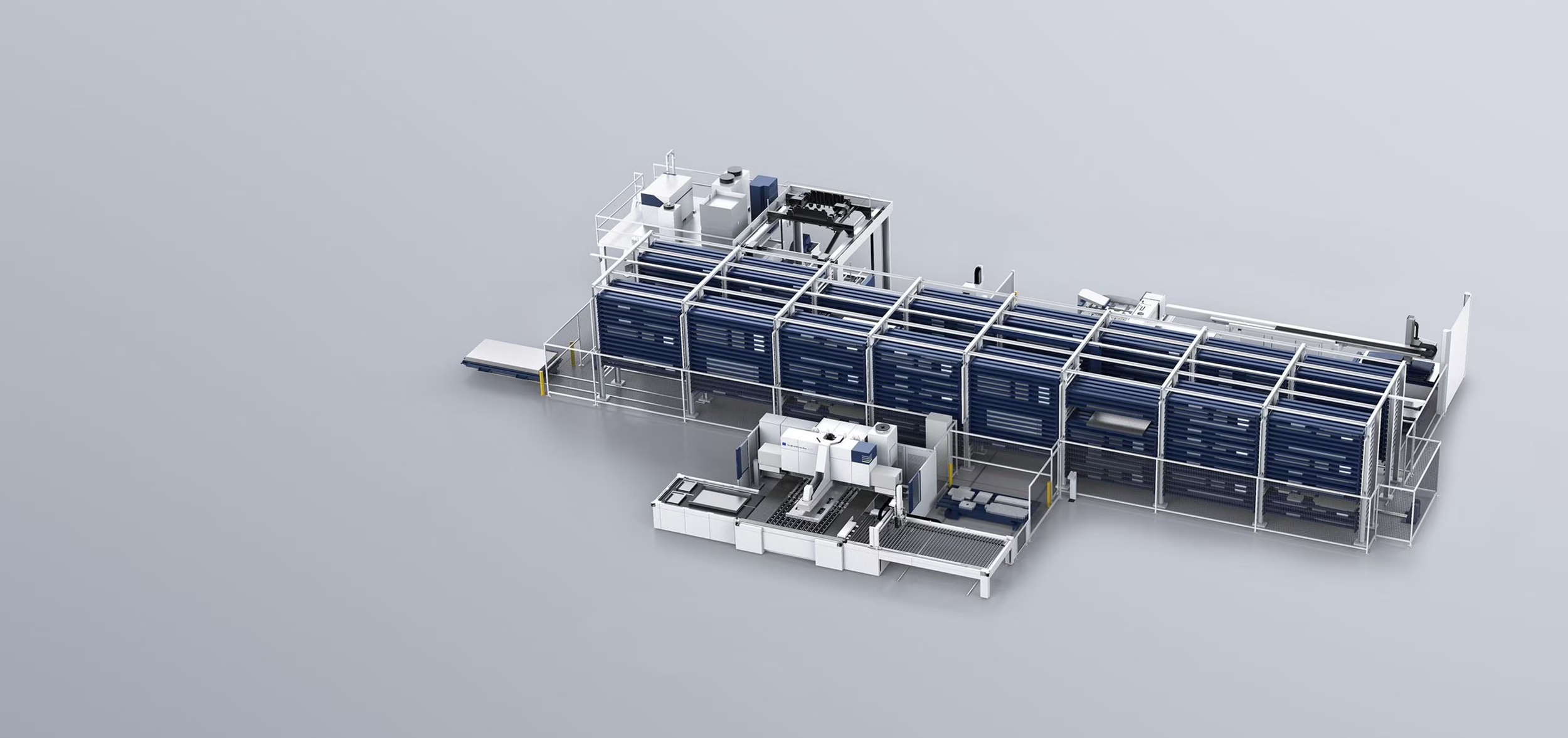
Industry Applications: Where the 7030 Shines
The 7030's combination of large bending length, 220 mm box capacity, and full automation makes it particularly effective in these industries:
Elevator and Escalator Manufacturing: These jobs demand long, narrow panels with complex stiffening flanges on surfaces that can't be touched up afterward. The 7030 processes them in a single automated cycle, holding tight tolerances across the full 3,120 mm bending length without operator handling.
Steel Furniture and Lockers: Short batch runs are where press brake economics break down. The 7030's rapid tool-change system and high-speed axes make it profitable to run small quantities without absorbing setup costs that erase your margin.
Industrial Enclosures: Electrical cabinets with deep flanges and integrated mounting features require multiple manual setups on a press brake. The 7030 forms them in a single pass, cutting cycle time and removing the variation that comes with repositioning the part by hand.
Architectural Facades: Large-format panels up to 3,120 mm stay perfectly flat because the 2-axis manipulator supports the sheet's weight throughout the entire bend cycle, preventing the bowing caused by manual handling and ensuring every panel fits on-site without field adjustment.
Is Your Shop Ready for the Fast Lane?
The TruBend Center 7030 doesn't ask you to trade surface quality for volume. It gives you both, at scale. Its split-drive architecture, 2-axis manipulator, and fully automated loading system give your shop the capacity to take on larger contracts and more demanding geometries with the consistency to win them again on the next order.
Stop choosing between the speed of your production and the integrity of your parts. Contact the Maintecx team for a technical evaluation and see how the TruBend Center 7030 fits into your operation.