
One Machine, Three Operations Gone: How Laser Tube Cutting Replaces Sawing, Drilling, and Milling
One of the most significant shifts in modern metal fabrication is the consolidation of the "saw-drill-mill" workflow into a single automated process. For decades, fabricating a tube-based frame meant moving material between three separate work centers: the saw for length, the drill press for apertures, and the milling machine for notches or complex joints.
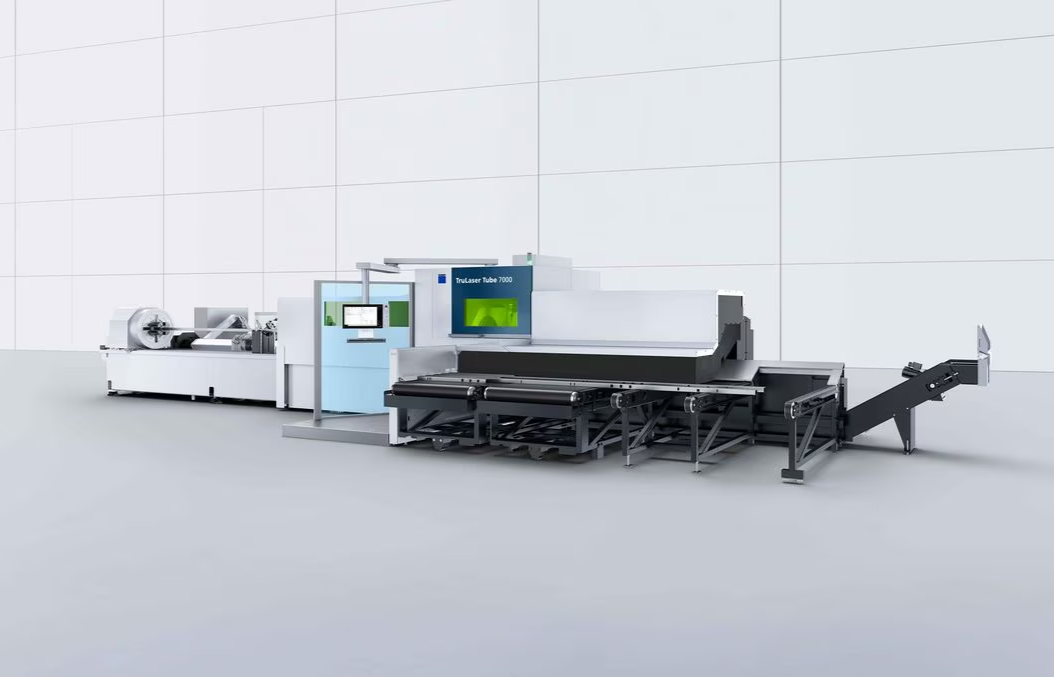
Today, TRUMPF laser tube cutting machines have rendered that fragmented workflow obsolete. By integrating these three operations into one machine, fabricators are seeing a 30% to 50% reduction in production time and a near-total elimination of human error.
This blog covers how laser tube processing optimizes your floor plan and transforms complex geometries into simple, automated cycles. We’ll also examine how this technology integrates with automated bending to create a seamless, end-to-end production flow.
What the Tube Laser Actually Replaces
Transitioning from individual stations to a singular laser system changes how tubes move through your shop floor. Here are the three main areas it can replace and why it’s beneficial as a manufacturer.
1. The Saw: From Rough Cuts to Finished Edges
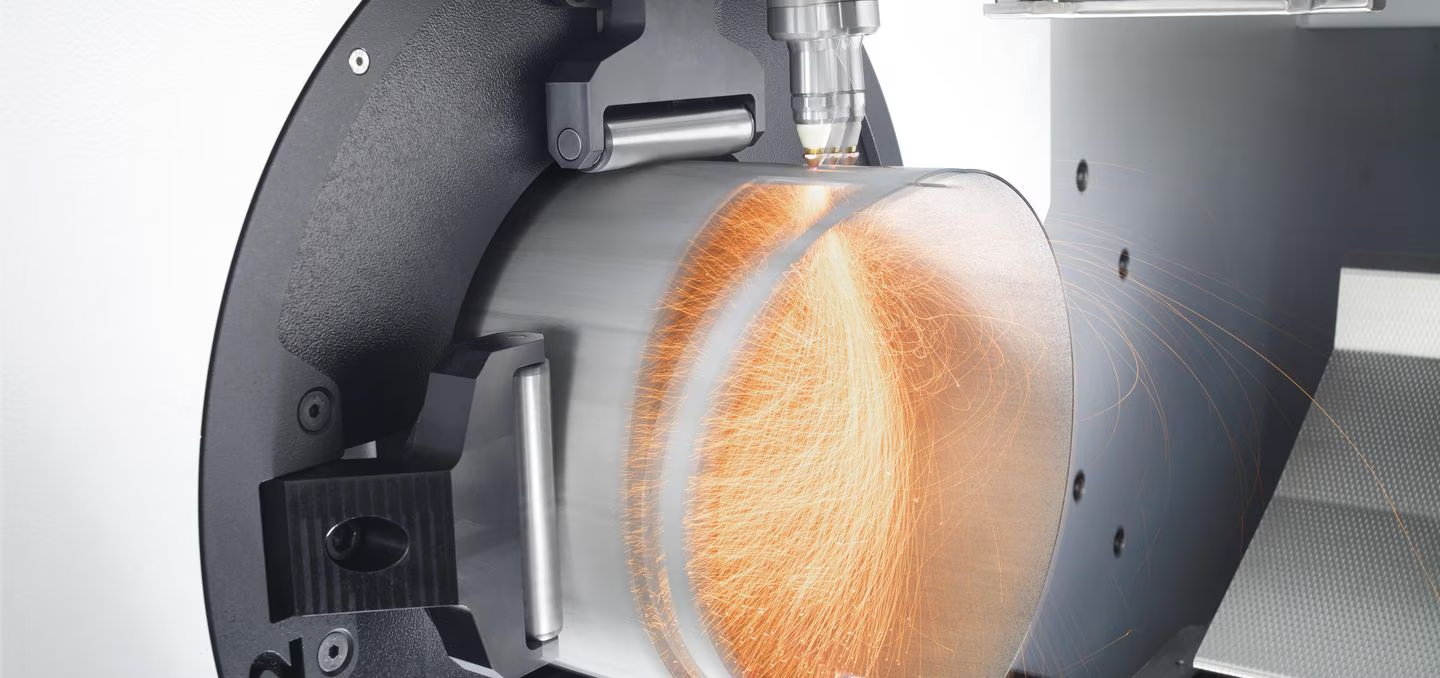
A standard cold saw or band saw produces a simple cut-to-length part, but it often leaves behind rough edges and significant burrs. With a TRUMPF tube laser, the cutting process yields clean, ready-to-assemble edges in a single pass. Because the laser is a non-contact tool, it maintains the integrity of thin-walled materials that might otherwise deform under the mechanical pressure of a saw blade. This precision also extends to complex 45° mitre and bevel cuts, which are executed with repeatable accuracy that manual sawing simply cannot match.
2. The Drill Press: No More Templates or Layouts
Using a drill press for apertures requires extensive layout time, manual center-punching, and specialized jigs to keep holes aligned across different faces. A laser tube eliminates these preparation steps by drilling round holes, slots, and complex profiles with a tolerance of ±0.005 inches. Features like SeamLine Tube use high-resolution cameras to detect weld seams, automatically aligning the tube so apertures are positioned correctly every time. This intelligence removes the risk of placing a hole directly on a seam, which can often cause failures in downstream assembly or welding.
3. The Milling Machine: Complex Joints Simplified
Milling notches or "fish-mouth" saddle joints into tubes is traditionally a labor-intensive process that requires high-end tooling, multiple setups, and hours of manual grinding. A 3D laser cutting head handles these intricate geometries as part of the primary cutting cycle. It allows for the creation of interlocking tab and slot designs, which enable frames to snap together like LEGO pieces with self-aligning precision. This capability effectively replaces the need for expensive milling blocks and complex welding fixtures, as the parts essentially act as their own jigs during the final assembly.
The Operational Gains of One-Machine Production
The return on investment for a tube laser is found in the soft costs it removes from your daily operations.
1. Drastic Reductions in Throughput Time
The most immediate benefit of a tube laser is the compression of your production calendar. In a traditional workflow, a part "waits" more than it is "worked on" — it waits for a forklift, waits in a queue for the drill press, and waits for a skilled miller to become available. By processing the part from raw stock to a finished component in one station, you eliminate these dead times" A frame that previously took three days to move through the shop can now be completed in minutes, allowing you to fulfill orders faster and improve your cash flow.
2. Reclaiming Productive Floor Space
A saw, a drill press, and a milling machine (along with their respective infeed/outfeed tables and safety zones) consume significant square footage. Consolidating these into a single TRUMPF footprint allows you to reclaim that floor space for revenue-generating activities. Many shops use this new found space to add high-value assembly stations or expand their shipping departments, effectively increasing their plant's output capacity without expanding the building.
3. Optimizing Skilled Labor
The current manufacturing landscape is still facing a shortage of skilled operators. Requiring three separate people to manage three different manual machines is an inefficient use of talent. One operator can manage a tube laser, which often outproduces all three manual stations combined. This allows you to reassign your most experienced fabricators to complex assembly or quality roles where their expertise is truly needed, rather than having them perform repetitive manual drilling or sawing.
4. Eliminating the Costs of Secondary Operations
Traditional mechanical cutting and drilling almost always necessitate a second step: deburring. Saws leave slag and drill presses leave sharp internal edges that interfere with fitment or paint adhesion. The laser’s heat-controlled cut produces smooth, clean edges that are ready for immediate welding or powder coating. Without the need for manual grinding and sanding, you eliminate a major labor expense and a significant source of shop floor dust and noise.
Industry Use Cases: Where the Automated Cycle Shines
Different sectors leverage the precision of an integrated cut-drill-notch cycle to solve specific engineering challenges.
1. Agriculture and Heavy Machinery
Agricultural frames are often built from high-strength, thick-walled materials that are difficult to drill and mill manually. Laser tube cutting allows engineers to design chassis with bend-and-weld reliefs. Instead of welding four separate tubes together, a single long tube can be notched and bent, maintaining structural integrity while reducing the number of weld seams and the need for heavy-duty fixtures.
2. Architectural and Structural Steel
For handrails, trusses, and decorative metalwork, the visual quality of the joint is super important. The ability to cut 3D bevels and complex mitres ensure that structural components fit perfectly on the first try. This precision reduces the time spent on-site during installation, as there is no need for field-grinding or forcing parts to fit.
3. Industrial Machine Frames
Machine builders rely on the Tab and Slot method to simplify assembly. By laser-cutting interlocking features into the frame components, the parts snap together with built-in alignment. This makes the assembly process nearly foolproof. The final frame is perfectly square and true before the first weld is even struck.
4. Commercial Furniture
High-volume runs of chairs, desks, and shelving units benefit from the laser's ability to create intricate decorative patterns and clean apertures in thin-walled tubing without any deformation. The resulting parts are burr-free and ready for high-end finishes, moving from the machine to the paint line with zero intermediate steps.
A Step Further With Automated Bending from transfluid
The efficiency of a laser tube cutter reaches its full potential when linked with automated bending technology. Maintecx can help you integrate the precision cutting of TRUMPF with the bending automation from transfluid.
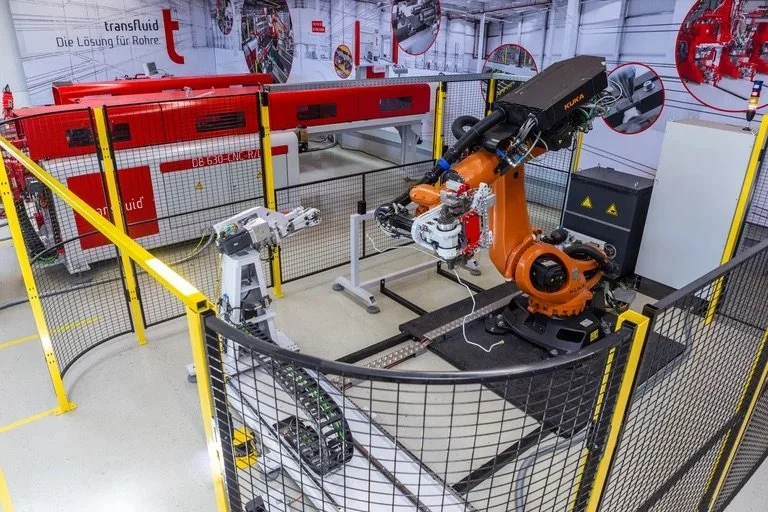
By connecting these systems, tubes move from a precision-cut state directly into a transfluid bending cell. The tMotion material handling system and tProject software allow for a fully autonomous flow, where the laser-cut data is used to optimize the bending program. This helps execute even the most complex multi-radius bends with the same accuracy as the initial laser cuts.
This integrated approach also maximizes material yield. Using intelligent nesting software across the entire 20-foot stick of raw stock, the system calculates the optimal sequence for both cutting and bending to minimize scrap. The result is a level of repeatable quality where the thousandth part of a production run is identical to the first, providing a seamless transition from raw material to a finished, bent component ready for final assembly.
The New Standard: Why It’s Time to Retire the Saw
Replacing the fragmented sawing, drilling, and milling process with a single TRUMPF system helps your entire business model. By consolidating these three operations, you remove the hidden costs of material transport, secondary deburring, and part-to-part variability.
This allows you to bid on jobs more competitively with shorter lead times, knowing your production costs are locked in through automation. Most importantly, it allows you to stop using your most skilled people for manual material handling and start using them for work that drives your shop forward.
Contact us today if you’d like to learn more about how laser tube cutting can help your shop or start exploring our available TRUMF laser tube cutting machines.
